
Businesses in Malaysia often order custom corporate gifts for conferences, onboarding programmes, customer appreciation, and seasonal campaigns. Because these activities usually have fixed event dates, production planning should begin well in advance to allow sufficient time for every stage of the process.
Corporate gift production time refers to the period required to complete a customised order from artwork approval to final delivery. The production timeline includes several stages, such as product sourcing, branding, manufacturing, quality inspection, packaging, and logistics. Understanding these stages helps businesses plan employee appreciation programmes, marketing campaigns, corporate events, and festive gifting initiatives more effectively.
This guide explains the typical production workflow, the factors that influence lead time, and how businesses can prepare their orders to support timely delivery.
Understanding Corporate Gift Production Time

Production time refers to the complete workflow required to transform a standard product into a customised corporate gift that is ready for distribution. It begins once product specifications and artwork have been confirmed and ends when the finished products are prepared for delivery.
A typical production workflow includes:
- Product selection
- Artwork preparation
- Artwork approval
- Branding and manufacturing
- Quality inspection
- Packaging
- Delivery
Each stage contributes to the overall lead time and should be considered during campaign planning.
Stage 1: Product Selection
Product selection is the foundation of every corporate gifting project. Businesses should choose products that align with their campaign objectives, recipient profiles, and branding requirements before production begins.
Common factors considered during product selection include:
- Intended recipients
- Campaign purpose
- Product functionality
- Material suitability
- Branding compatibility
- Packaging requirements
Finalising product choices early allows suppliers to prepare the next stages without unnecessary delays.
Stage 2: Artwork Preparation
Artwork preparation involves organising the branding elements that will appear on the selected products. Properly prepared artwork helps ensure accurate logo reproduction and reduces the need for production revisions.
Businesses should prepare the following:
- High-resolution company logos
- Vector artwork files
- Brand colour references
- Approved typography where applicable
- Logo placement requirements
Providing complete artwork at the beginning of the project supports a smoother production process.
Stage 3: Artwork Approval
Artwork approval is the stage where businesses review digital mock-ups before manufacturing begins. This review confirms that logos, colours, positioning, and branding elements meet company standards.
During artwork approval, businesses should verify:
| Artwork Element | Purpose |
| Logo placement | Correct positioning |
| Brand colours | Consistent visual identity |
| Product dimensions | Appropriate logo sizing |
| Spelling | Accuracy of printed text |
| Overall layout | Professional presentation |
Production should only proceed after final approval has been confirmed.
Stage 4: Manufacturing and Product Preparation
Manufacturing begins after artwork approval is completed. During this stage, products are prepared for branding according to the selected production method.
Depending on the product, manufacturing activities may include:
- Material preparation
- Product assembly
- Surface cleaning
- Production scheduling
- Batch organisation
- Component inspection
These processes ensure products are ready for branding while maintaining consistent quality across the order.
Stage 5: Branding and Printing
Branding is the stage where company logos or promotional designs are applied to each product using the selected printing or finishing method.
Common branding methods include:
- Silk screen printing
- UV printing
- Laser engraving
- Embroidery
- Pad printing
- Heat transfer
The branding method depends on the product material, logo complexity, and intended use. Different techniques require different production procedures, which may influence the overall production schedule.
Stage 6: Quality Control
Quality control is an essential part of the production process. It ensures that products meet branding specifications before they are packaged and delivered.
Typical quality inspections include:
- Logo accuracy
- Colour consistency
- Print quality
- Material inspection
- Product functionality
- Packaging verification
A structured quality assurance process helps minimise defects and ensures consistency across all customised products.
Stage 7: Packaging
Packaging protects corporate gifts during transportation while also contributing to their overall presentation.
Businesses may choose different packaging options depending on the campaign, of which some examples include:
| Packaging Option | Typical Application |
| Individual gift boxes | Executive gifts |
| Branded paper bags | Corporate events |
| Protective cartons | Bulk deliveries |
| Reusable pouches | Lifestyle products |
| Gift sleeves | Promotional campaigns |
Packaging should be selected according to both functional and branding requirements.
Stage 8: Delivery and Distribution
The final stage of production involves preparing products for shipment and coordinating delivery to offices, event venues, or multiple business locations.
Businesses should confirm:
- Delivery addresses
- Event schedules
- Recipient quantities
- Receiving contacts
- Packaging requirements
- Distribution arrangements
Proper logistics planning helps ensure products arrive before important business events.
Factors That Influence Production Time
Production timelines vary because every corporate gifting project has different requirements. Some products require additional manufacturing or branding processes, while others may involve more complex packaging or distribution.
Several factors can influence lead time:
| Factor | Impact on Production |
| Product availability | May require additional sourcing |
| Branding method | Different techniques require different workflows |
| Artwork revisions | Additional approvals may extend production |
| Packaging requirements | Custom packaging adds production stages |
| Order quantity | Larger orders require more production planning |
| Delivery location | Logistics planning may vary |
Understanding these variables allows businesses to develop more realistic campaign schedules.
Planning Ahead for Corporate Events
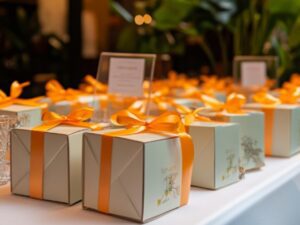
Many corporate gifting campaigns are linked to fixed business events where delivery deadlines cannot easily be changed.
Examples include:
- Employee onboarding
- Conferences
- Product launches
- Trade exhibitions
- Company anniversaries
- Festive celebrations
Starting procurement early provides additional flexibility if artwork revisions, production adjustments, or logistical changes become necessary.
Rush Orders and Expedited Production
Some businesses require customised corporate gifts within shorter timeframes due to unexpected events or last-minute campaign planning.
Although expedited production may be possible for certain products, availability depends on several operational factors, including:
- Product stock availability
- Branding requirements
- Production capacity
- Artwork readiness
- Delivery arrangements
Businesses should discuss urgent requirements with their supplier as early as possible to determine whether the requested timeline is achievable.
How Businesses Can Reduce Production Delays
Many production delays can be avoided through careful preparation before an order is confirmed.
Businesses can support a smoother production process by:
- Finalising product selection early.
- Preparing complete artwork files.
- Approving mock-ups promptly.
- Confirming recipient quantities.
- Coordinating delivery details in advance.
- Maintaining clear communication with the supplier.
These practices reduce unnecessary revisions and improve overall project coordination.
Frequently Asked Questions (FAQs)
What is corporate gift production time?
Corporate gift production time refers to the complete process required to prepare customised corporate gifts, including artwork approval, branding, quality inspection, packaging, and delivery.
What affects the production timeline?
Production time depends on several factors, including product availability, branding methods, artwork approval, packaging requirements, order quantity, and delivery arrangements.
Why is artwork approval important?
Artwork approval ensures that logos, colours, and branding elements are accurate before manufacturing begins. Reviewing artwork carefully helps minimise production errors.
Does every product have the same production process?
No. Different products require different manufacturing methods, branding techniques, and quality inspections. The production workflow depends on the characteristics of each item.
How can businesses avoid production delays?
Businesses can reduce delays by selecting products early, preparing artwork promptly, approving designs without unnecessary revisions, and coordinating delivery schedules with their supplier.
Effective Planning Supports Timely Corporate Gifting
Producing custom corporate gifts involves multiple coordinated stages, from product selection and artwork preparation to branding, quality control, packaging, and delivery. Understanding each step allows businesses to plan more effectively, minimise production delays, and ensure their corporate gifting campaigns are completed in time for important events while maintaining consistent branding and product quality.
Partner with CF Corporate Gift
Businesses planning customised corporate gifts for employee appreciation programmes, customer engagement campaigns, or corporate events can contact CF Corporate Gift to discuss suitable products, branding options, and production planning for their upcoming projects.