
Businesses in Malaysia use logo printing on corporate gifts for employee appreciation programmes, customer engagement, exhibitions, product launches, and corporate events. However, not every printing method is suitable for every product. The material, intended use, logo complexity, and expected lifespan of the gift all influence which branding option delivers the best results.
Corporate gift printing refers to the process of applying a company's logo, brand colours, or promotional message onto corporate gifts using specialised printing or finishing techniques. Selecting the appropriate printing method is an important part of creating branded merchandise because it affects appearance, durability, product suitability, and overall brand presentation.
This comprehensive guide explains the most common corporate gift printing methods, their advantages and limitations, and how businesses can select the most suitable option for different types of promotional merchandise.
Why Printing Quality Matters
Printing quality determines how accurately a company's branding is represented on a product. A clear and durable logo helps reinforce professionalism, while poor printing quality may negatively affect how recipients perceive the business.
High-quality printing supports several business objectives, including:
- Consistent corporate branding
- Better product presentation
- Longer-lasting brand visibility
- Improved recipient experience
- Professional corporate image
Choosing an appropriate printing method is therefore as important as selecting the product itself.
Factors That Influence the Choice of Printing Method
The most suitable branding technique depends on both the product and the artwork. Before recommending a printing method, suppliers typically evaluate several factors.
These include:
- Product material
- Surface shape
- Logo complexity
- Number of print colours
- Intended product usage
- Required durability
For example, a stainless steel tumbler may benefit from laser engraving, while a cotton tote bag is generally better suited to silk screen printing.
Silk Screen Printing
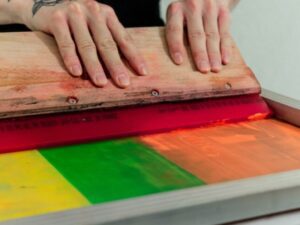
Silk screen printing is one of the most widely used branding methods for promotional merchandise. It transfers ink through a mesh screen onto the product surface, producing vibrant and consistent results.
This method is commonly used for:
- Tote bags
- T-shirts
- Notebooks
- Paper bags
- Plastic folders
Advantages
- Suitable for large production runs
- Produces vibrant solid colours
- Cost-effective for simple artwork
- Works well on flat surfaces
Limitations
- Less suitable for highly detailed artwork
- Multiple colours require separate screens
- Not ideal for products with curved or uneven surfaces
Silk screen printing remains one of the most practical options for everyday promotional merchandise.
UV Printing
UV printing uses ultraviolet light to cure specialised ink immediately after it is applied to a product. This process produces sharp images with excellent colour accuracy.
It is commonly used for:
- Acrylic products
- Power banks
- Wireless chargers
- Gift boxes
- Plastic accessories
Advantages
- High-resolution printing
- Suitable for detailed logos
- Full-colour printing capability
- Fast curing process
Limitations
- Surface preparation is important
- Some materials may have lower adhesion than others
- Not every product is compatible with UV printing
UV printing is often selected for products requiring detailed graphics or photographic-quality branding.
Laser Engraving
Laser engraving permanently removes a thin layer of material to create an engraved logo or design. Unlike printed logos, engraved branding becomes part of the product itself.
Laser engraving is commonly applied to:
- Stainless steel bottles
- Metal pens
- Executive gift sets
- USB drives
- Name plates
Advantages
- Highly durable
- Professional appearance
- Resistant to fading
- Suitable for premium products
Limitations
- No colour printing
- Works best on compatible materials
- Limited visual contrast on some surfaces
Businesses frequently choose laser engraving for executive gifts because it provides a refined and long-lasting finish.
Embroidery
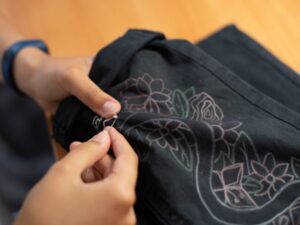
Embroidery stitches logos directly onto fabric using coloured thread. It is widely used for textile products where durability and premium presentation are priorities.
Common embroidered products include:
- Polo shirts
- Jackets
- Caps
- Backpacks
- Travel bags
Advantages
- Excellent durability
- Professional appearance
- Resistant to washing
- Suitable for fabric products
Limitations
- Less suitable for intricate small logos
- Limited colour blending
- Higher production complexity
Embroidery remains one of the preferred branding methods for apparel and fabric-based corporate merchandise.
Pad Printing
Pad printing transfers ink using a soft silicone pad, making it suitable for products with curved or irregular surfaces.
Typical applications include:
- Pens
- USB drives
- Keychains
- Stress balls
- Small electronic accessories
Advantages
- Suitable for uneven surfaces
- Good precision for small logos
- Works on various materials
Limitations
- Limited print size
- Less suitable for large graphics
- Multiple colours require additional production steps
Pad printing is commonly selected for compact promotional items where other printing methods may not be practical.
Heat Transfer Printing
Heat transfer printing applies printed artwork onto products using heat and pressure. It is often used when full-colour graphics or detailed images are required.
Products frequently using heat transfer include:
- Sports apparel
- Polyester bags
- Fabric accessories
- Promotional clothing
Advantages
- Supports detailed graphics
- Suitable for multi-colour artwork
- Flexible application
Limitations
- Durability varies depending on usage
- Less suitable for some heavy-use products
- Requires compatible materials
Heat transfer is useful for customised designs that contain gradients or complex artwork.
Sublimation Printing
Sublimation printing converts specialised ink into gas, allowing it to bond permanently with compatible materials. The result is a vibrant image embedded within the product surface rather than sitting on top of it.
Common products include:
- Ceramic mugs
- Polyester apparel
- Mouse pads
- Coasters
- Drinkware
Advantages
- Bright, vibrant colours
- Long-lasting finish
- Resistant to peeling
- Excellent for full-colour graphics
Limitations
- Limited to compatible materials
- Generally requires light-coloured surfaces
- Not suitable for all promotional products
Sublimation is particularly effective for products requiring photographic-quality branding.
Debossing and Embossing
Embossing creates a raised logo, while debossing creates an indented impression on a product surface. These methods are commonly used on premium materials such as leather, faux leather, and presentation folders.
Suitable products include:
- Leather notebooks
- Executive organisers
- Document holders
- Gift boxes
- Wallets
Advantages
- Elegant appearance
- Premium presentation
- No ink required
- Long-lasting finish
Limitations
- Limited colour options
- Best suited to specific materials
- Less visible on certain textures
Embossing and debossing are often selected when businesses prefer subtle branding over prominent logos.
Foil Stamping
Foil stamping uses heat to transfer metallic foil onto selected products, creating reflective finishes that enhance presentation.
Common applications include:
- Premium gift boxes
- Invitation cards
- Certificates
- Luxury packaging
- Presentation folders
Advantages
- Premium visual effect
- Metallic finishes
- Suitable for luxury packaging
- Enhances perceived quality
Limitations
- Limited to decorative applications
- Higher production complexity
- Not appropriate for every product category
Foil stamping is often combined with embossing to create premium packaging for executive corporate gifts.
Comparing Common Corporate Gift Printing Methods
The following table provides a general comparison of popular branding methods.
| Printing Method | Best For | Durability | Colour Capability |
| Silk screen printing | Bags, notebooks, apparel | High | Single or limited colours |
| UV printing | Plastic, acrylic, electronics | High | Full colour |
| Laser engraving | Metal products | Very High | No |
| Embroidery | Fabric products | Very High | Thread colours |
| Pad printing | Small curved products | High | Limited colours |
| Heat transfer | Apparel, fabric | Moderate to High | Full colour |
| Sublimation | Mugs, polyester | Very High | Full colour |
| Embossing/Debossing | Leather products | Very High | No |
| Foil stamping | Packaging | High | Metallic finishes |
How to Choose the Right Printing Method
Choosing the right printing method depends on balancing branding objectives with product characteristics. Businesses should evaluate the product's intended use rather than selecting a printing technique based solely on appearance.
Before confirming production, consider the following:
- Identify the product material.
- Determine how frequently the item will be used.
- Evaluate logo complexity.
- Consider durability requirements.
- Review branding guidelines.
- Consult the supplier for suitable recommendations.
Working with an experienced supplier helps ensure the selected branding method complements both the product and the campaign objectives.
Common Mistakes to Avoid
Businesses sometimes select printing methods without considering product compatibility or long-term durability.
Common mistakes include:
- Choosing a printing method based only on cost.
- Using detailed artwork on unsuitable surfaces.
- Ignoring material compatibility.
- Overlooking durability requirements.
- Approving artwork without reviewing proofs.
- Selecting branding methods that do not suit the intended use.
Avoiding these issues helps produce higher-quality corporate gifts that better represent the business.
Frequently Asked Questions (FAQs)
What is corporate gift printing?
Corporate gift printing is the process of customising promotional products with company logos, branding elements, or marketing messages using specialised printing or finishing techniques.
Which printing method is the most durable?
Laser engraving, embroidery, embossing, and sublimation are generally among the most durable branding methods because they become part of the product rather than sitting only on its surface.
Which printing method is suitable for fabric products?
Embroidery and heat transfer are commonly used for fabric products. The most suitable option depends on the material, design complexity, and intended use.
Can every product use the same printing method?
No. Different materials require different branding techniques. The appropriate method depends on the product surface, durability requirements, and logo design.
Why is choosing the correct branding method important?
Selecting the correct branding method helps ensure the logo remains clear, durable, and consistent with the company's brand standards throughout the product's lifespan.
Selecting the Right Branding Method for Lasting Results
Corporate gift printing plays an important role in presenting a company's brand professionally across a wide range of promotional products. By understanding the strengths, limitations, and suitable applications of each printing method, businesses can make informed decisions that improve product quality, brand consistency, and recipient experience while supporting long-term marketing and relationship-building objectives.
Partner with CF Corporate Gift Today
Businesses planning customised promotional merchandise, employee appreciation gifts, or branded corporate products can reach out to a trusted corporate gift supplier in Malaysia, such as CF Corporate Gift, to discuss suitable printing methods and branding solutions for their specific requirements.